GENERAL INTERESTS
I am an observational physical oceanographer whose research focuses on mixed layer processes. I am particularly interested in how upper ocean heating is influenced by the presence of barrier layers and phytoplankton, and how we can use a range of tools to explore these questions.
How do barrier layers affect upper ocean heating?
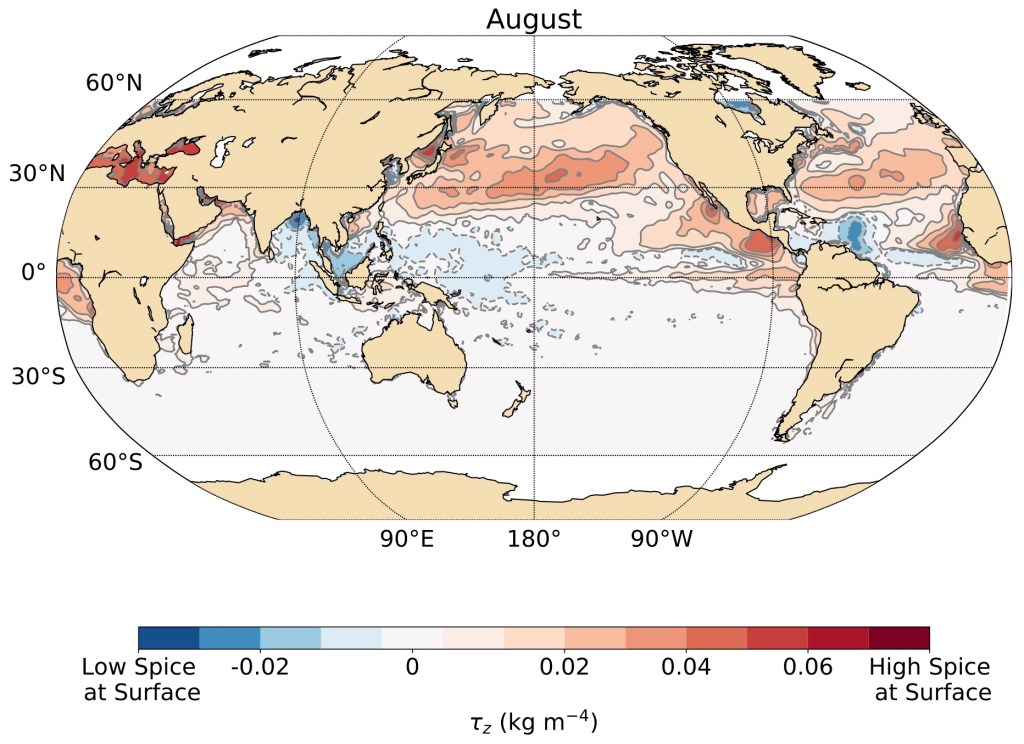
Barrier layers occur when the upper ocean is stratified by salinity, with no concurrent temperature stratification. They most frequently occur in regions that experience massive influx of freshwater due to river outflow, such as in the Bay of Bengal and the Amazon River plume. My work on barrier layers has focused on (1) refining how we define them and determine the mechanisms behind their formation and (2) investigating how their presence alters the mixed layer heat budget, using the Arabian Sea as a case study.
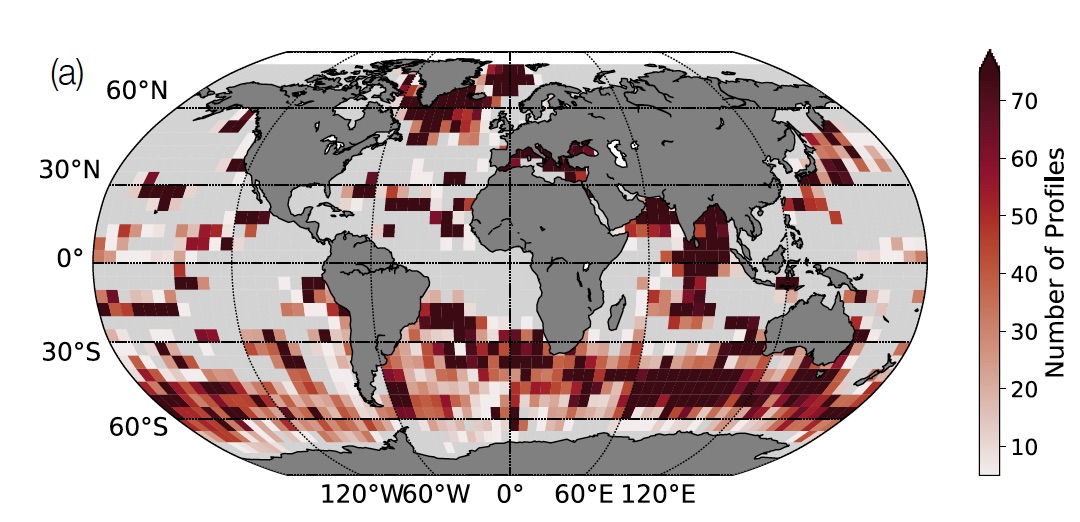
Distribution of BGC Argo floats carrier bio-optical sensors used for clustering.
How are phytoplankton distributed?
In order to understand how the presence of phytoplankton influences upper ocean heating, we first have to know how they are distributed in the upper ocean. The Biogeochemical Argo program provides an unprecedented opportunity to explore this question in conjunction with clustering methods from machine learning. This work is ongoing and will be submitted for review soon!
Additional research projects
Submesoscale Mixed-Layer Eddies (SMiLE) Experiment
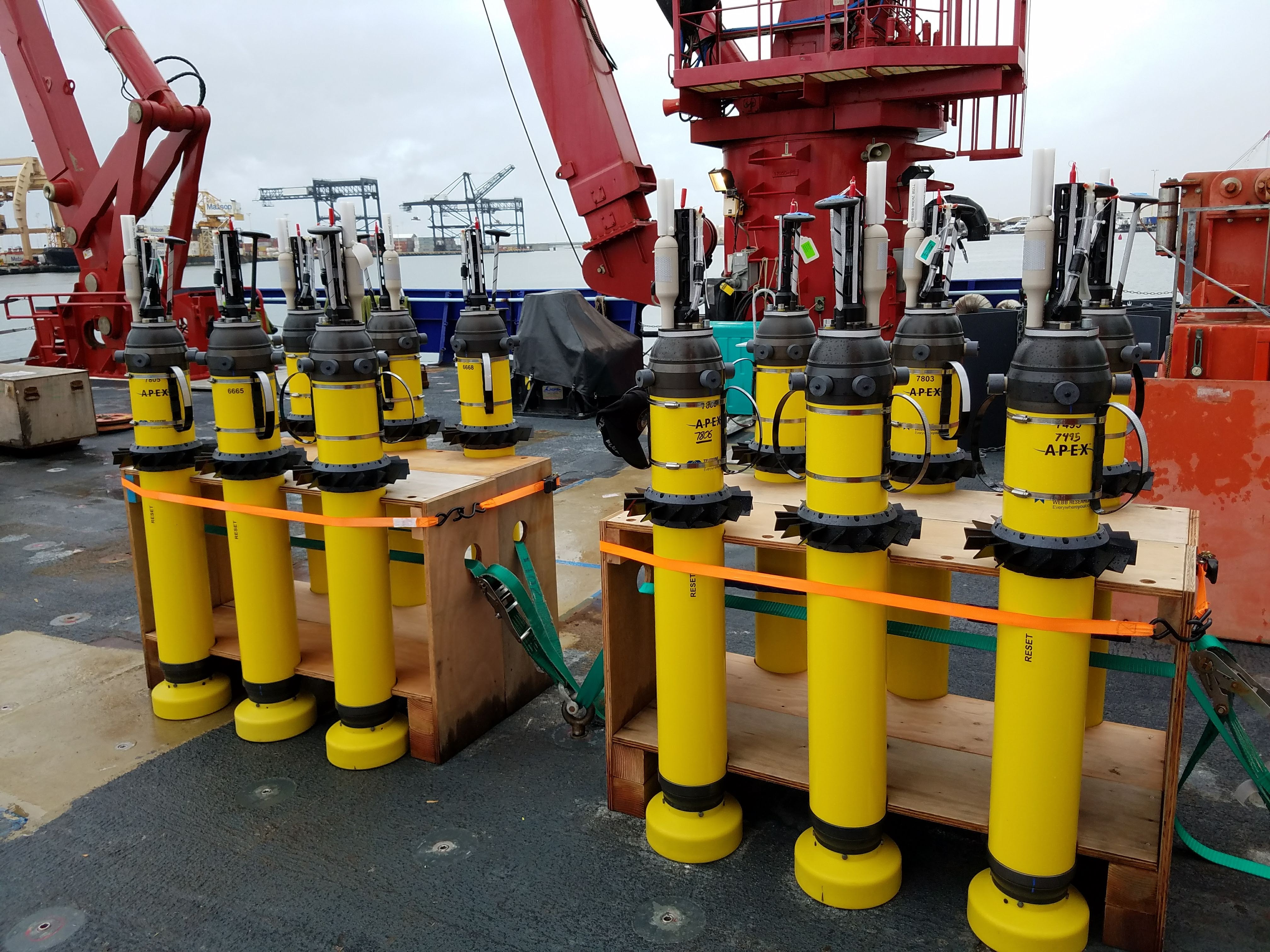
I participated as volunteer scientist on a 2017 research cruise in the North Pacific to understand the behavior of fronts under springtime restratification conditions. In addition to participating in instrument deployment and monitoring and onboard data analysis, I was the primary contributor to the cruise blog.
 Rosalind Echols